2026/2027 AGE GROUP CHANGE FAQ's


What is the "age group transition"?
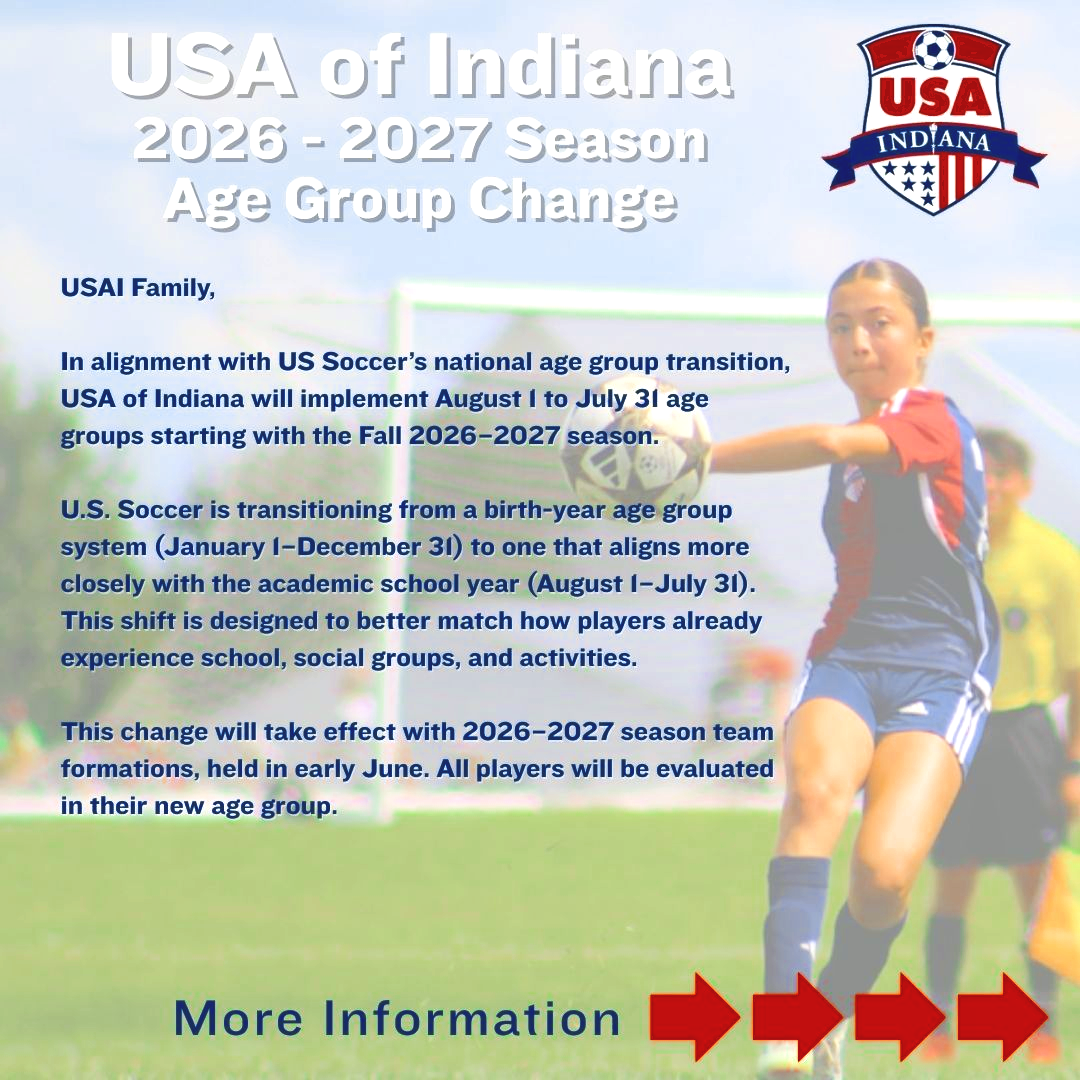
Starting in the 2026/27 competitive season, youth soccer age groups will be organized by school year (August 1 – July 31) instead of calendar/birth year (January 1 – December 31).
Who made this decision?
The change was made by U.S. Soccer in coordination with US Youth Soccer and US Club Soccer, the governing bodies of youth soccer in the United States.
Why is U.S. Soccer making this change?
The birth-year system created unintended challenges such as roster instability, “trapped” school players, maturity mismatches, and higher dropout rates. School-year alignment better reflects how kids live, learn, and play, and aligns soccer with other youth and school sports.
What is the purpose of the change?
The goal is to improve the player experience, improve roster stability, support long-term development, and keep players together with their school peers for longer.
Will this affect the 2025/26 season?
No. Teams will remain under the birth-year system through the end of the 2025/26 season. The first USAI program affected will be the Travel Team Formations in June 2026.
Does this apply to all leagues (ISL, EA, E64, CNC, etc.)?
Yes. All USAI travel teams will transition to the new age group system beginning with the 2026/2027 season.
Will registration now be based on a player's school grade?
Not exactly. Age groups will still be determined by birth date, but the birth-date window will shift to August 1 through July 31. Players who attend a grade outside their age group will still play based on their birth date.
What players are most likely to shift age groups?
Players with birthdays in August through December are most likely to be affected by the change, as they will probably remain in their current age group for 2026/27. For example, a player with an October 2016 birth date (current U10) will remain a U10 for the 2026/27 season.
Are teams being split up?
While some changes are unavoidable, USAI staff and coaches will work to make transitions thoughtful, supportive, and player-centered. Team environments will be managed with care.
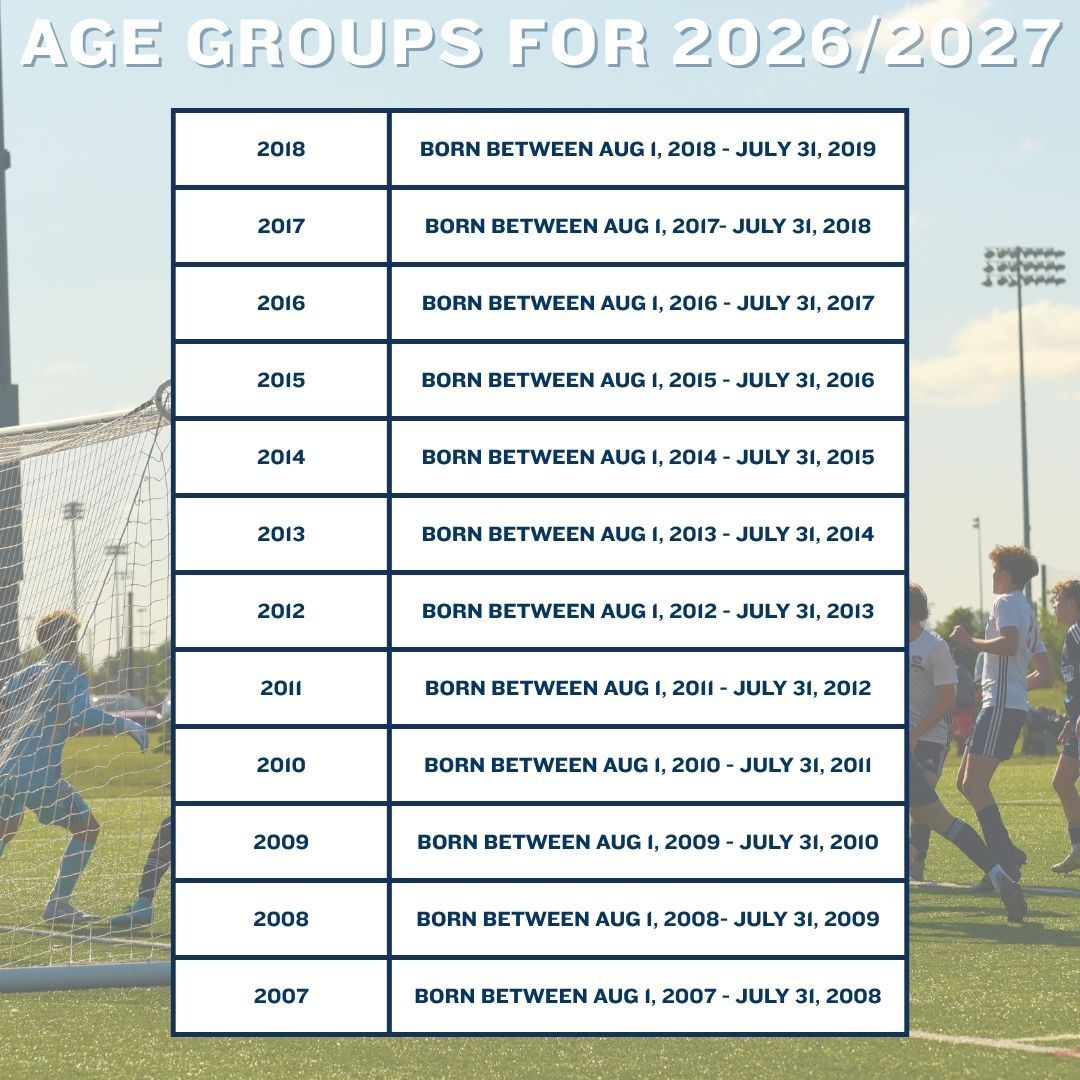
What will my child’s age group be under the new systems?
One may find the 2026/2027 age groups on page 2 of the USAI Age Chart.
How will player placement selections be affected?
Player placement for 2026/27 will follow the new age group ranges. Players and families will receive guidance and updates ahead of registration to help promote clarity.
When will 2026/27 player placement take place?
Information on registration and tryouts will be published in April 2026.
Isn’t this unfair to kids who already built strong friendships?
Change is hard - that’s real. Friendships don’t disappear because teams shift. Our job at USAI is to help players transition smoothly, keep environments positive, and make sure kids still feel supported, are excited to play, and have fun. This doesn’t have to be a negative experience.
Will my child fall behind competitively?
No. In fact, school-year alignment often reduces maturity gaps and creates more appropriate competitive environments. Development is not about who’s ahead at 10 or 12 — it’s about who’s still improving, confident, and loving the game at 16-18.
How does this help my child?
- They’re more likely to play with classmates
- Teams stay together longer
- Development focuses on growth, not early size or speed
- Players are more likely to enjoy soccer and stay involved
Is this better for long-term development?
Yes. It reduces physical maturity gaps and supports technical and tactical growth over time.
Will this affect college or long-term opportunities?
No. College coaches value development, game understanding, and passion for the sport, not age labels. This change does not negatively impact long-term pathways.
Why can’t USAI ignore the change?
League competition, registration, and standards are governed by U.S. Soccer.
How does this benefit USAI players?
- More stable rosters year over year
- Better alignment with school schedules and peer groups
- Improved retention
- Clearer development pathways
- Stronger Club culture and identity
This helps USAI deliver a better experience long-term.
What stays the same at USAI?
Our mission. We remain focused on:
- Developing the next generation of fine young men and women, one child at a time.
- Player development over wins
- Enjoyment and confidence
- Long-term retention in the game
- Positive, supportive coaching environments
What will families experience during the transition?
Clear communication, support from coaches, thoughtful roster planning, and a strong focus on making this a positive experience for players.
Who should I contact if I have questions or concerns?
USAI is committed to supporting every family through this transition. Please direct questions to your Coach.
The body content of your post goes here. To edit this text, click on it and delete this default text and start typing your own or paste your own from a different source.